
Side Project — Relationship OS
A relationship system that tells me who I've gone quiet on, and gives me something real to say
One structured note per person, a dashboard that flags who is overdue, and a Claude skill that researches every new contact and drafts outreach in my own voice. I review and send every message myself.
What It Is
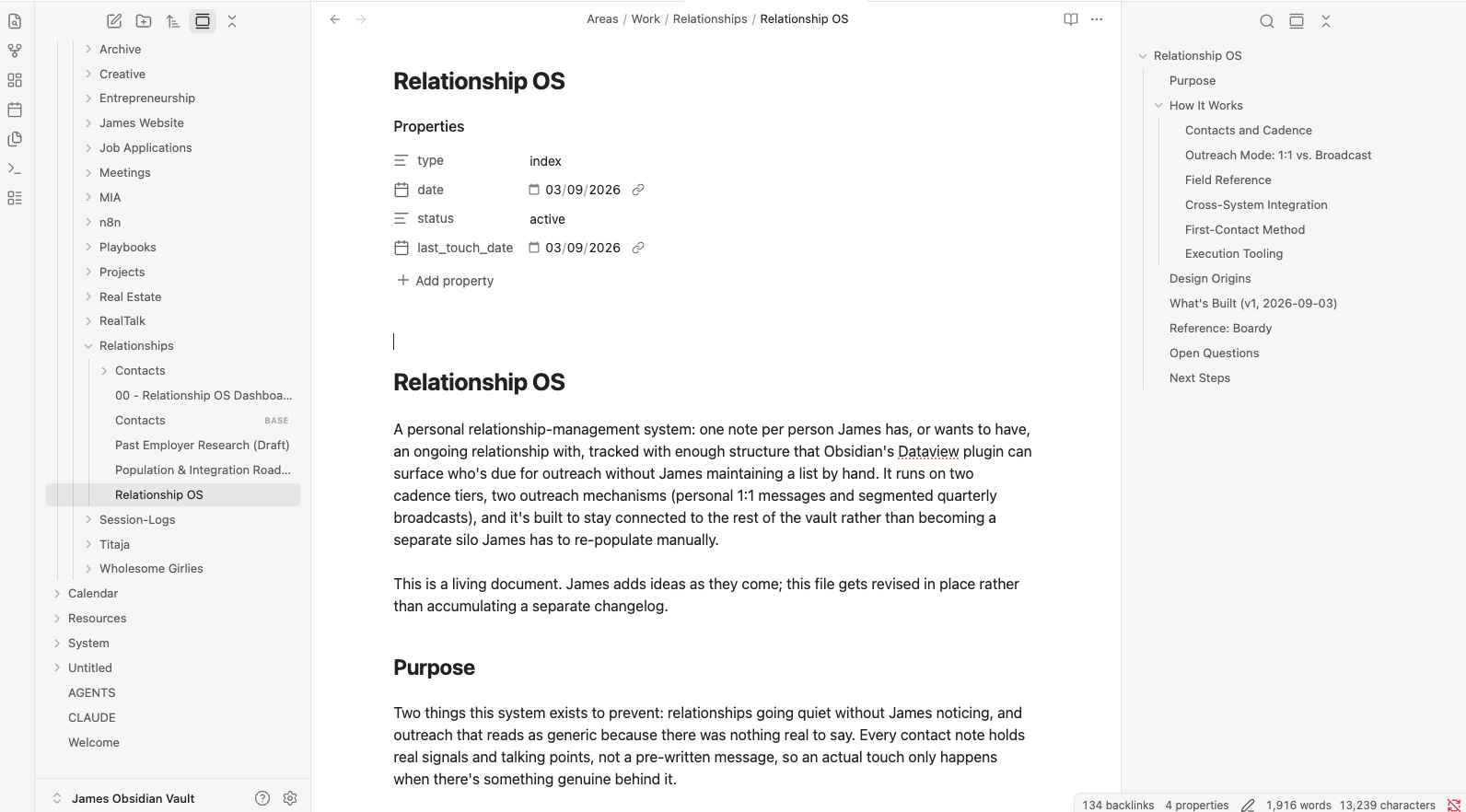
Relationship OS is the system I use to manage my professional relationships. It holds one structured note per person in Obsidian, a dashboard that shows who is due for a touch, and a Claude skill that runs the whole loop. When I add someone, the skill researches their career history and recent activity through the browser before the note is even finished. It currently tracks 127 people across six relationship types: past employers, recruiters, referral partners, senior operators, peers, and prospects.
Why I Built It
Most of my best work has come through people rather than cold outbound. Even so, those relationships went quiet without me noticing. When I did reach out, the message often read as generic because I had nothing specific to say.
A founder I met on an intro call showed me how he keeps a 300-person list and reaches out to about 20 people a day. He believes enterprise deals run on referrals. Another operator sends a short five-part update to mentors every half year, and people he assumed were too busy write back. I combined both habits into one system that fits how I work.
What It Does
Two cadence tiers. Close relationships get a personal message about once a month. My wider network gets a segmented update once a quarter, sent in the same fixed week each time.
Automatic research on add. New contacts start with their career history and recent posts already filled in, so the first message can be specific.
Overdue tracking. Each person has a silence threshold, and the dashboard lists everyone past it.
Drafts from real signals. 1:1 messages are written fresh in my own voice from what is currently happening with that person. Stored templates go stale.
Segmented broadcasts. Recruiters, past employers, and past clients each get their own quarterly update: why I'm writing, wins, challenges, what's next, and a real question back.
It never sends anything. Every draft gets my review, and I send it myself. That was a deliberate design choice.
What It Taught Me
A contact list is easy to build, but a reason to reach out is hard to find. The value sits in the research and signal layer, because that is what turns "checking in" into a message worth replying to. A slower cadence also holds up better than a faster one. Weekly one-way contact reads as needy, and most relationships don't produce new signals that often.
Want something like this?
I'm open to full-time or in-house work where you need an ongoing plan or someone to lead marketing for the long term. I also offer specific marketing and sales services for teams that need help with the work itself: marketinginaction.xyz/services.