
Side Project — AI Content Engine
A content engine that turns a brand's search tools into social content
I am piloting it on my own brand, Wholesome Girlies. It takes the tools, calculators and checklists a site already uses to win search traffic and turns them into videos and images made for each platform, for organic posts and for paid ads.
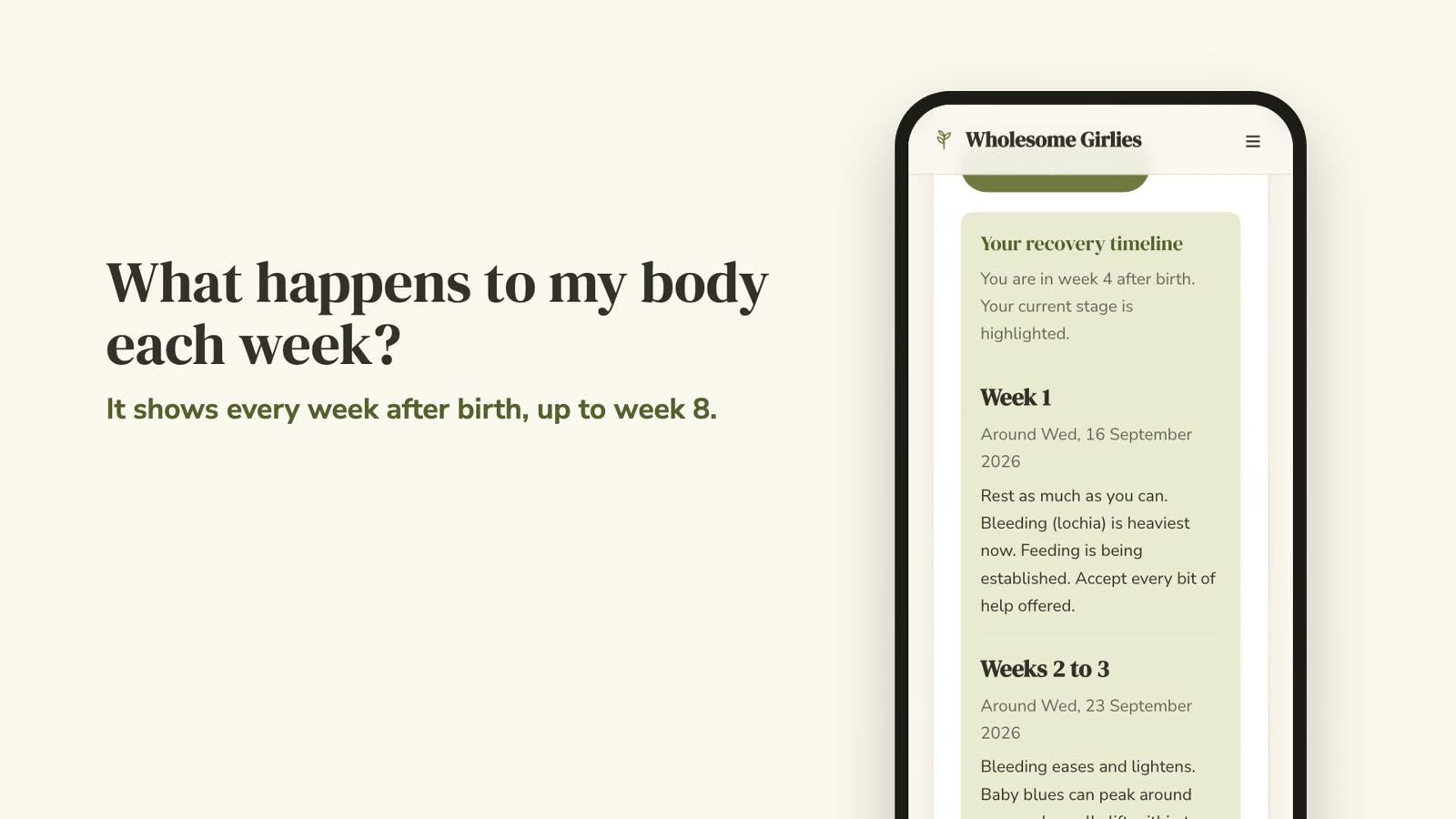
This is a pilot. Nothing has been scored yet, so there are no results to report. · Wholesome Girlies ↗
What It Is
This is an AI workflow that researches, ideates, creates and distributes content. It decides what to make from four inputs: what is performing in the market, what is trending, what is unique to the brand, and what has a real chance of spreading. It then produces the videos and images in the formats each platform expects, with engineering built in so the content is useful, engaging and easy to share.
Why I Built It
Wholesome Girlies is new. In the 28 days ending 25 September, it had 36 users and four Search Console clicks. It had no sales or ad spend. Its tools, calculators and checklists were built to earn search traffic, but search takes time on a new site. People cannot share the tools until they find them, so the site needed another way to bring in its first visitors.
The tools also give me material for social content. People use each one for a real reason, so I can show the live tool in organic posts and paid ads. This approach works for brands where I control the website or publication.
What It Does
Research comes first. Before I write an angle, I study what is already winning. For Wholesome Girlies that meant 105 posts across its six programs, each labelled by angle, structure, format, style and hook, plus the comments underneath, where the audience names its own problems. Each video borrows the structure of a proven reference. The claims are written fresh and checked against the health advertising rules in my green and red tiering document.
A motion kit builds the videos. I made it on Remotion, a tool for making video with code. A capture script drives the live page in a headless browser, fills in the tool the way a user would, and saves the page's real code at each step with its exact styles, fonts and images. Remotion then animates that capture. The rule is that a video never shows a value the live tool did not produce.
Seven styles keep the feed varied: phone demo, big reveal, card stack, chat in, cast skit, printable fly-out and quiet page. I build each short once and render it in 9:16 for TikTok, Instagram Reels and WhatsApp Status, in 4:5 for feeds, and in 16:9 for X, LinkedIn and the site. Every style closes on the same end card with the address and one specific line about what to type in. The music rotates through 14 licensed Mixkit tracks, so two shorts in a row never share one.
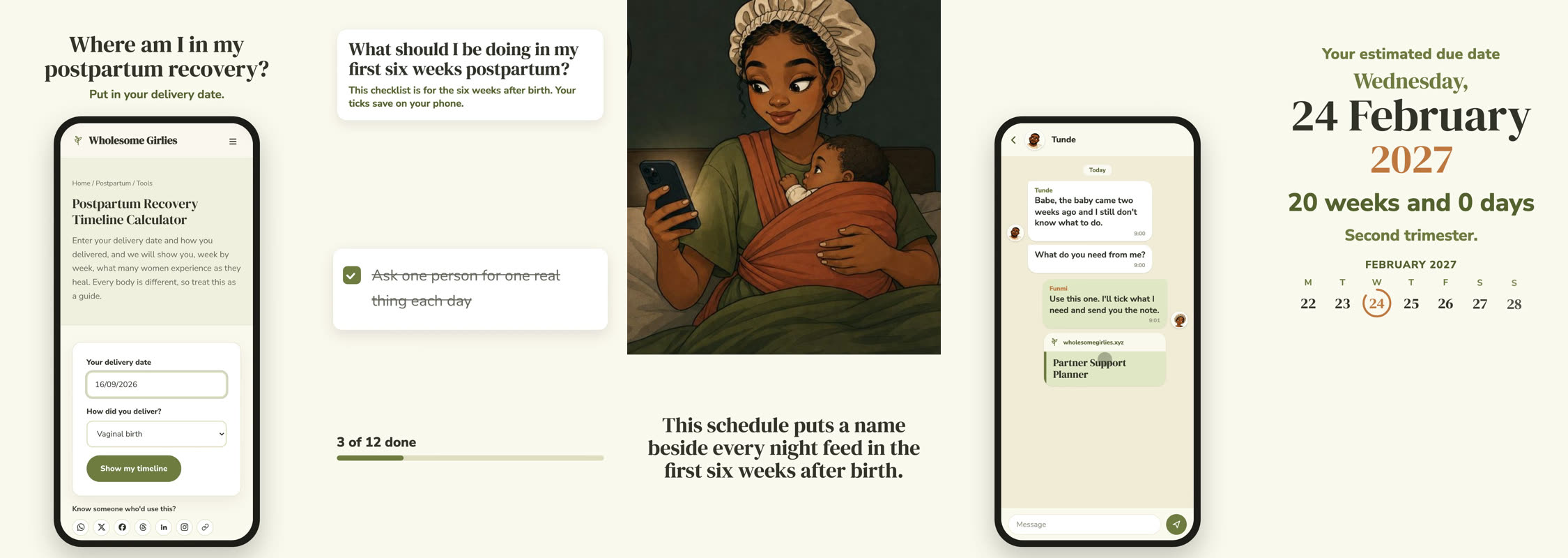
The voice gets checked by a script and by a second writer. The audience is Nigerian women at home and abroad, and AI copy gives itself away fast. So I wrote a voice engine in six files: a corpus of real speech, a word guide by city, notes on how Nigerian media writes, and a guide to Nigerian English and pidgin. A Claude Code skill runs a scanner with regression tests over every brief. It flags AI phrasing, fake pidgin and wrong vocabulary for the speaker's city. Codex is the second writer and reviewer for Nigerian phrasing. I check every flag it raises against the word guide, and any word I have confirmed wins.
Every video starts as a brief. All briefs come from one template with the hook, the shot table, the real tool output, the end card and the destination. I have written 18 user-generated content (UGC) briefs for Google Flow. Twelve are dialogue stories with two or three AI characters and six are one-woman talking heads. A standing rule says every new tool gets a short, and the site's page check fails when a tool has no brief. Static images and carousels take a different route. A ChatGPT Copy Engine writes the copy, a Claude Design Engine turns it into a spec, and a Claude Code skill renders the files.
Distribution starts organic on TikTok, Instagram and WhatsApp Status, and paid ads go on the winners. Organic posts link to the tool and paid ads land on a bridge page. Each wave starts only after the last one is scored, so production credits go to formats that have already worked.
Three waves of tool shorts are rendered and I have not scored the first wave yet. The Virality Plan for the site adds result cards and share buttons to the tools, and I do not know yet whether people will use them.
Nothing in the pipeline belongs to women's health. The capture script reads a site list, and the same kit already renders a short for the Marketing In Action outbound calculator. Each brand needs its own voice rules, compliance rules and swipe research. The engine fits any brand where I control the site or the publication, and any organic, paid or inbound growth engine.
What It Taught Me
My first captions were generic, so I rewrote every on-screen line to name the real input and the real result. I also changed how I think about the videos. Their job is to bring the first visitors to the tools. The result cards and share buttons then give those visitors a way to send a tool to someone else. The pilot has not shown yet whether that sequence works. So far I have proved the build process. I have not yet proved that it grows anything.
Want something like this?
I'm open to full-time or in-house work where you need an ongoing plan or someone to lead marketing for the long term. I also offer specific marketing and sales services for teams that need help with the work itself: marketinginaction.xyz/services.